Cryogenic IQF – the best solution for your Individual Quick Freezing needs
What is IQF?
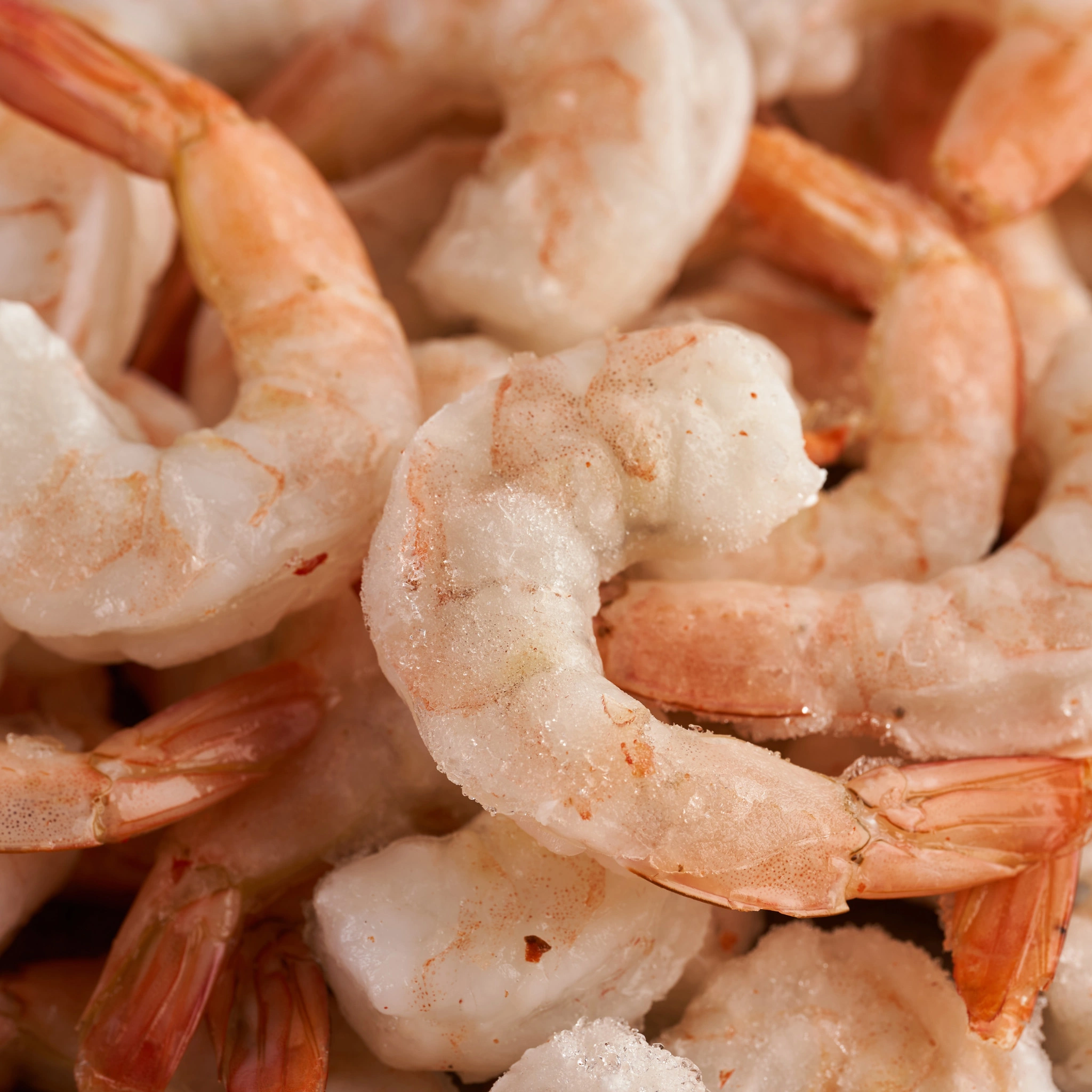
Let’s start with the basics – what is the famous “IQF” that everyone in the food processing industry is talking about. The “IQF” stands for “Individual Quick Freezing” (or “Individually Quickly Frozen”). The name already suggests that we are dealing with process of individual freezing of products. However, as we are talking about food industry that is: meat, seafood, Ready Meals (i.e. Meal-Ready-to-Eat / MRE), vegetable, fruit, dairy processing, or even bakery products, an industrial scale must be applied as well.
Let us focus on each part of the name then.
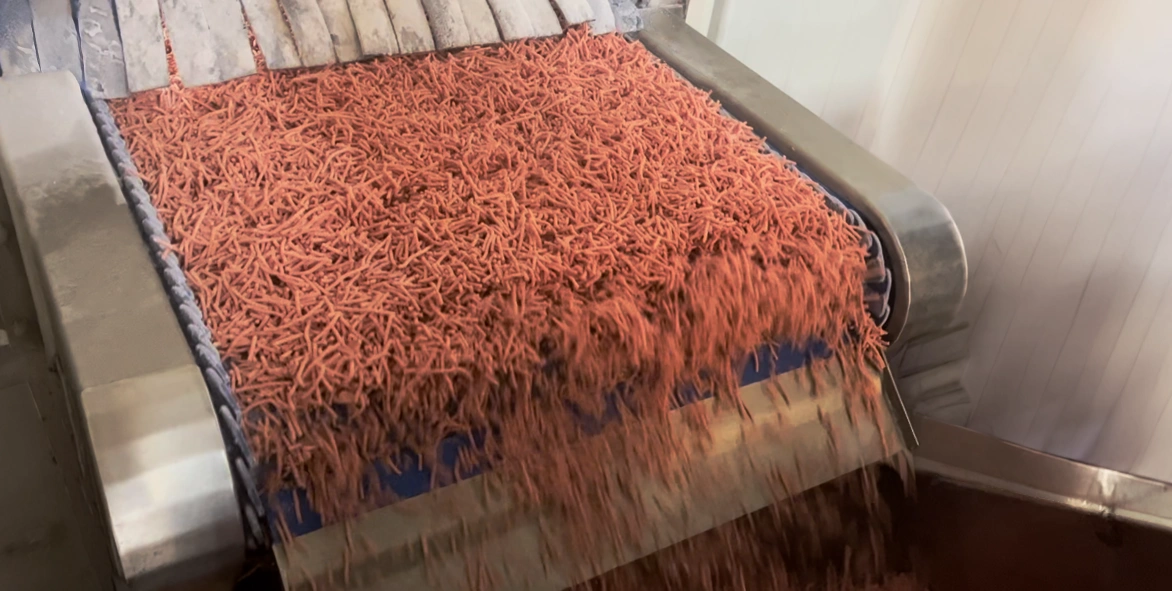
1. Individual: we’re obviously dealing with product en masse and yet wetalk about ‘individual’. That’s because in IQF the goal is to processindividual pieces of product – no matter how big or small the singular piece ofit is. Chicken fillet, whole fish, salmon chunks, pieces of cauliflower, dicedmeat cubes, burger patties, kebab meat chunks – all of these can be subject toIQF.
The key takeaway is that they need to remain individual at the end of the process. That is: they can’t become frozen together, they can’t become product clumps. By the end of the freezing process, they need to be loose. There is no single definition for margin of error – there are those who claim that only a 100% success rate for keeping the product pieces separately can be called an IQF process. Some end-customers define their own internal metrics in the range of 90-100% separation rate. The industry standard usually oscillates around the 98% success in keeping the product pieces apart.
2. Quick: this brings us to a paradox, because – what does “quick” actually mean? If you ask someone who only dealt with mechanical freezing processes so far, they’ll tell you 20-30 or maybe even 40 minutes. If you ask someone who utilizes cryogenic freezing process, it’ll be in range o 1-5 minutes. A huge definition gap, isn’t it? And both are correct! Although 20 minutes is an eternity from cryogenic freezing process perspective, but from mechanical freezing perspective – it’s actually quite efficient and fast.
3. Freezing: as we have mentioned before there are two main paths for industrial freezing process – cryogenic and mechanical. Each has its own pros and cons.

How does Cryogenic Freezing work?
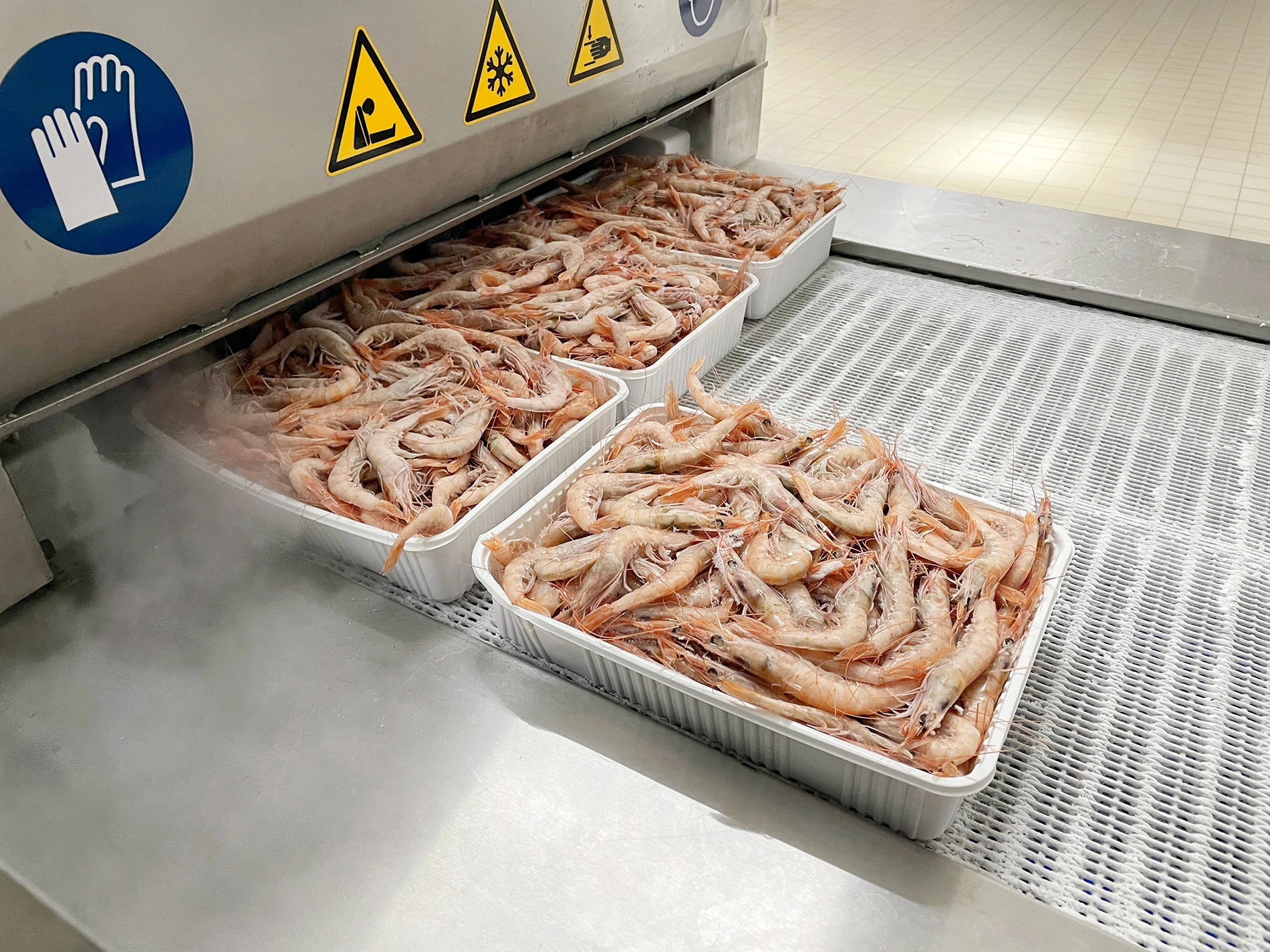
Cryogenic freezing is a process where we mainly use two mediums: liquid nitrogen (LN2) which allows us to cool products down to -196°Cand solid CO2 that lets us cool products down to -78°C. There are three major upsides to the cryogenic freezing: it’s fast, the temperature issuper-low, the footprint is much smaller compared to mechanical freezing.
Especially the speed and temperature are important as both these factors result in less product dehydration and smaller ice crystals which further leads to better texture of the frozen product, less cellular damage, less drip loss and in effect: higher yield on your delicate products.
Cryogenic refrigeration systems are more flexible, easier to speedup (so it can handle production spikes better), ready for rapid deployment and usually lower initial CAPEX.
What’s the downsides then? Possibly higher cryogen medium costs (so cryogenic freezing is usually used for higher-value products), lower volume throughput compared to mechanical counterparts.
What is Mechanical Freezing?
Mechanical freezing on the other hand uses conventional refrigeration utilizing more complex system of compressors and heat exchangers, while working in range of -30°C/-40°C. This means that the freezing process takes much longer, which allows for more dehydration of the product, but also creates larger ice crystals which in turn damage product on the cellular level. That leads to worse texture and higher drip compared to cryogenic freezing method. The initial CAPEX is higher (however the long-term OPEX may be lower),the footprint is often considerably larger.
Why then the industry decides for mechanical freezing? The answer is two-fold. Firstly – it’s better at sustained large volume operation, especially when low-value product is involved, secondly – it has been the industry standard for several decades now. As much as “we’ve been using it for a long time” isn’t exactly the best argument, investing in known and well-establishedtechnology is a factor for decision-makers that must be taken into consideration.


Dohmeyer’s take on IQF
Individual Quick Freezing is not something that any engineering company can take upon itself from the get-go. Without extensive practical knowledge and expertise, one is bound to make expensive mistakes. Dohmeyer experience in IQF process dates back more than 20 years, resulting in deep understanding of different aspects of individual quick freezing, cryogenics, mechanical freezing and hybridization of both.
Our extensive knowledge is reflected in many practical use-cases highlighted in our Technology and FAQ sections. We guarantee only the best results with cryogenic IQF.
Typical methods for performing Individual Quick Freezing include product fluidization, vibration, cascade fall, rotation, immersion, mixing with dry ice and tunnel / belt conveyor freezing.
Dohmeyer equipment for Individual Quick Freezing
Working with Dohmeyer, you have the flexibility no other partner can give you in the matter of IQF process. Not only we’re able to customize equipment to your needs, but often we’re able to provide standardized solutions that are reliable and still fit your needs.
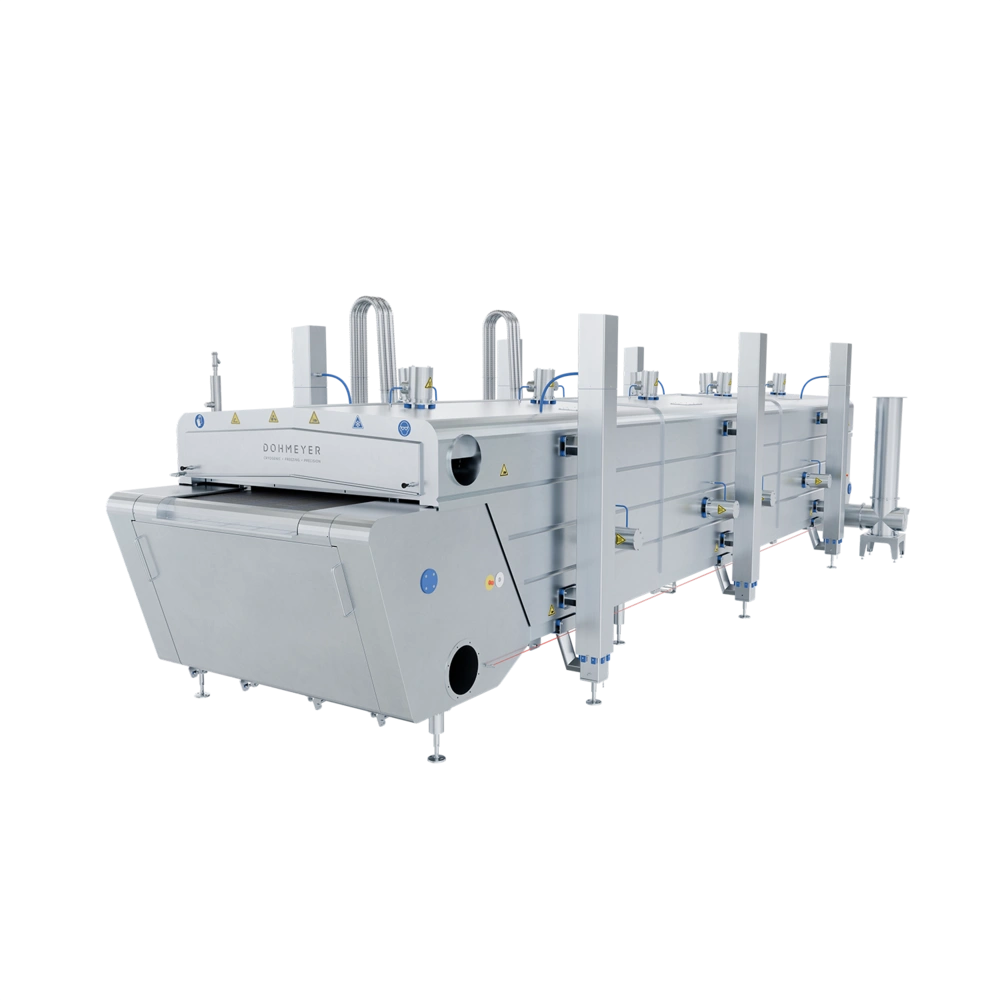
Cryo Tunnel
Efficient, hygienic, safe. Our flagship product for Cryogenic IQF. A cryogenic freezing tunnel is the go-to solution for most Customers who need a simple and reliable solution for their quick freezing needs. It is much shorter than classic mechanical freezing version and much faster in terms of processing.
CryoRoll
A large-scale solution for multiple IQF needs includingcryo-coating. The Cryo Roll’s important feature is that it can be successfully used in industries other than food production. Such application can be rapid freezing for cryo-milling / cryo-grinding – embrittling the recyclate, supporting its better processing.
Cryo Tumbler
Dohmeyer’s perfect solution for individual quick freezing and cryogenic coating. Enables our Clients to apply coating (i.e. sauces, flavouring, dough, etc.) to their products, even up to 700% of their original product mass.
LIN Bath
An ideal solution for ice glazing and quick freezing – also useful and tested with biomedical materials and pharmaceutical products
Multibelt Freezer
Designed to handle difficult products requiring Individual Quick Freezing. Pieces of products fall gently from belt to belt, keeping itself separate from other product pieces, while efficient design minimizes the installation footprint.
Choosing between cryogenic and mechanical freezing technologies is not a simple task, but you can rest assured that Dohmeyer is here to help you. Together we can find the perfect solution for your product and process, giving you the upper hand in the growing competitive market. Contact us today and get to know more about Dohmeyer Cryogenic Freezing Precision!