Seafood in a modern industrial freezing process
Seafood in a modern industrial freezing process
How cryogenic freezing help you preserve cellular integrity and product value?
In the modern seafood industry, the preservation of cellular integrity from catch to consumer is a critical engineering challenge that dictates both market value and food safety. The Dohmeyer Cryo Tunnel and Cryo Spiral systems represent a fundamental shift away from traditional mechanical freezing by leveraging the extreme temperature gradients offered by liquid nitrogen (LN₂) and carbon dioxide (CO₂).
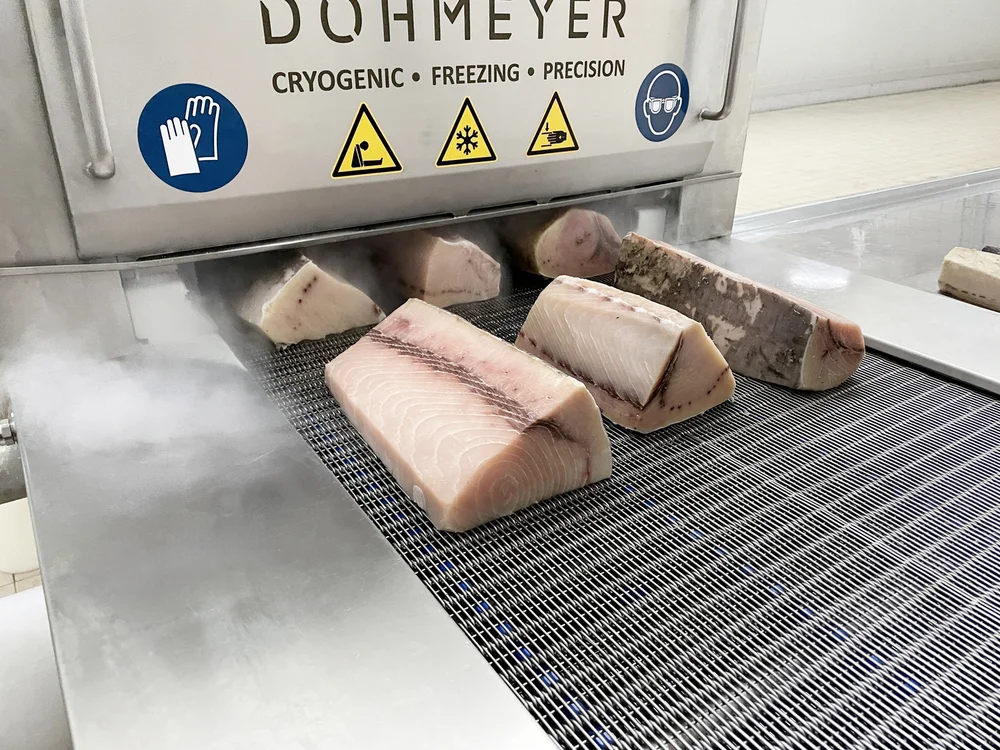
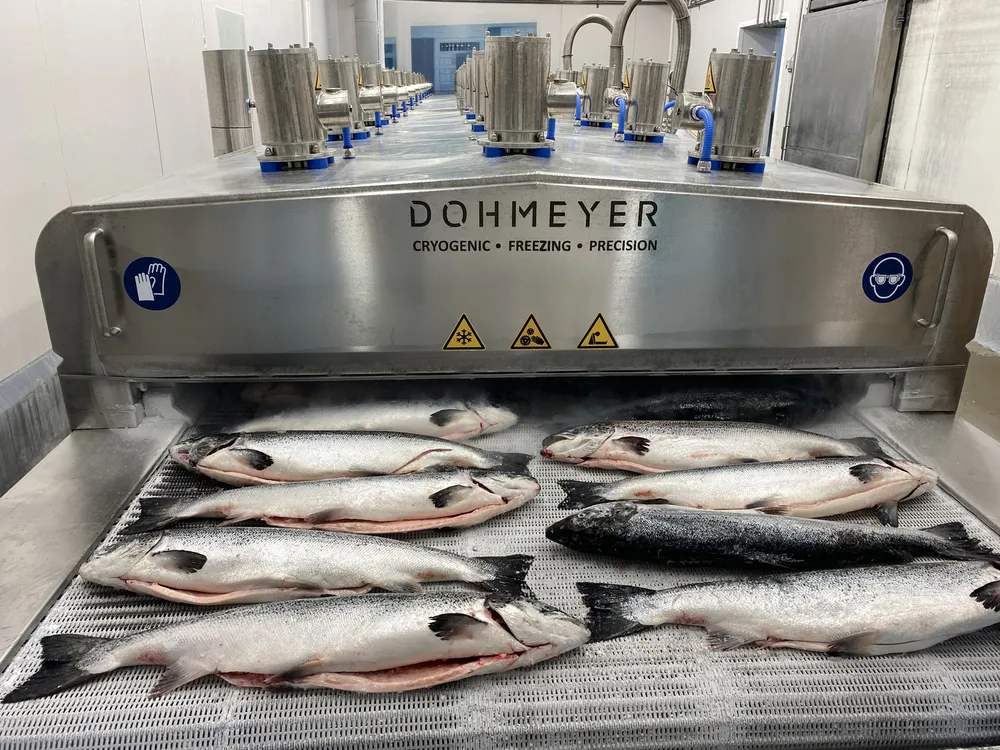
Traditional mechanical freezers, typically operating at -40°C, provide a relatively low temperature gradient (ΔT) of approximately 40°C against ambient products, resulting in slow freezing times that often range from 20 to 40 minutes. In contrast, cryogenic systems operating at -100°C or lower create a ΔT of nearly 100°C depending on pre-cooling operations, enabling heat transfer coefficients of up to 140 W/m²·K compared to a mere 17W/m²·K for mechanical air-blast systems. This nearly 80% reduction in average freezing time, allowing a 100g fish fillet to reach its target core temperature in approx. 4 minutes, is crucial for preventing the formation of large and destructive intracellular ice crystals.
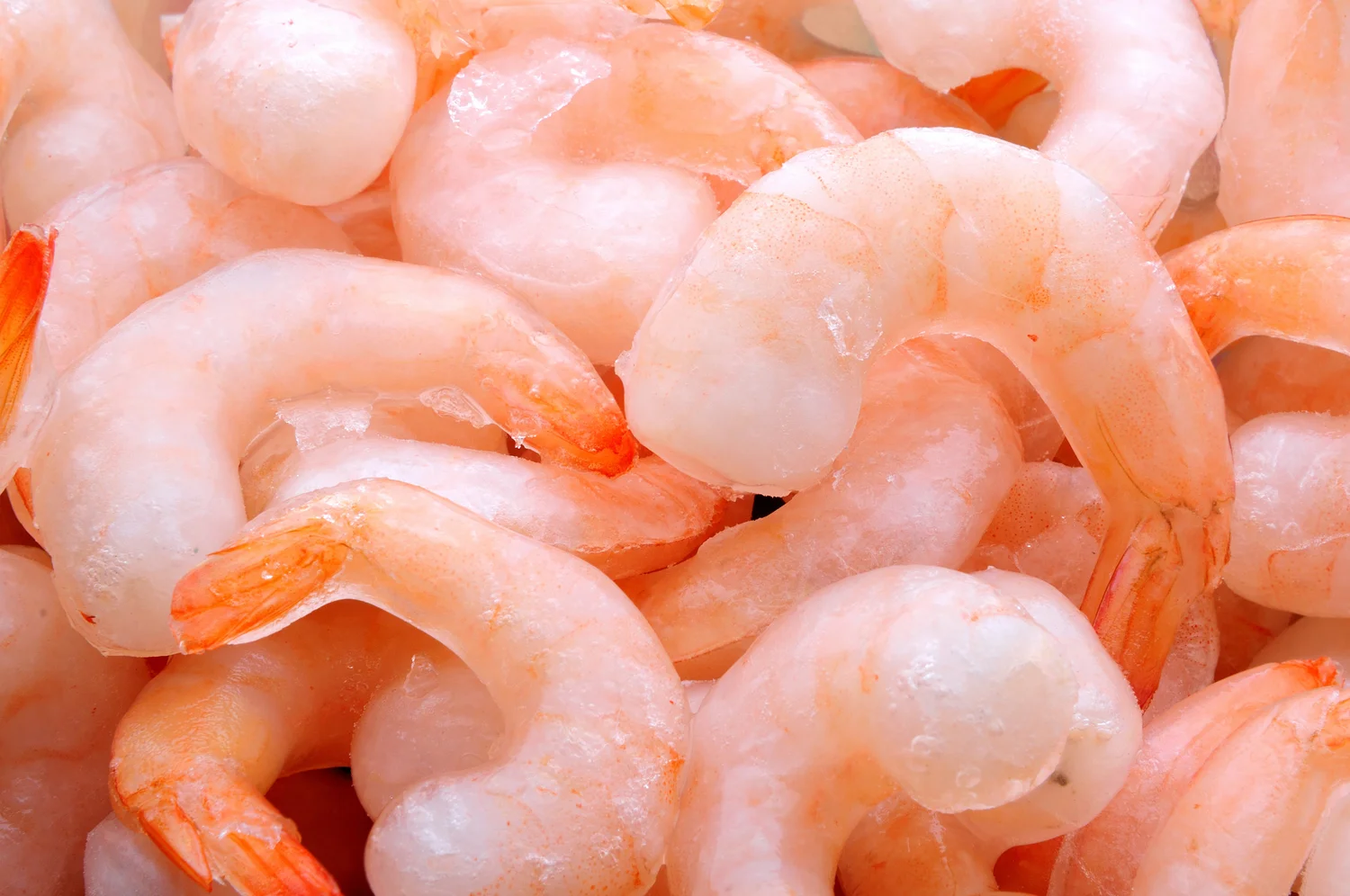
What about this “cellular damage”? The freezing speeds are especially important for fish and seafood, because they contain between 60% and 90% water. For these products, the slow freezing allows water to expand and form macro-crystals (>50μm) that rupture cell membranes, leading to heavy drip loss and a "mushy" texture upon thawing.
Cryogenic protection from drip loss
Cryogenic freezing preserves the natural texture, flavor, and appearance by forming micro-crystals (<10μm) that keep the cellular structure intact. Moisture loss is significantly mitigated. While mechanical systems often result in 3–5% dehydration loss due to long exposure in the sublimation zone (–1°C to –5°C), Dohmeyer cryogenic systems limit this loss to less than 1%, directly increasing the sellable yield of premium products like salmon fillets, scallops, and shrimp. This rapid reduction in temperature also halts enzymatic and oxidative processes much faster than conventional methods, ensuring that the flavor profile remains as close to fresh-caught quality as possible.
Achieving true IQF separation for delicate seafood
Innovative multi-belt technologies for high-throughput seafood lines
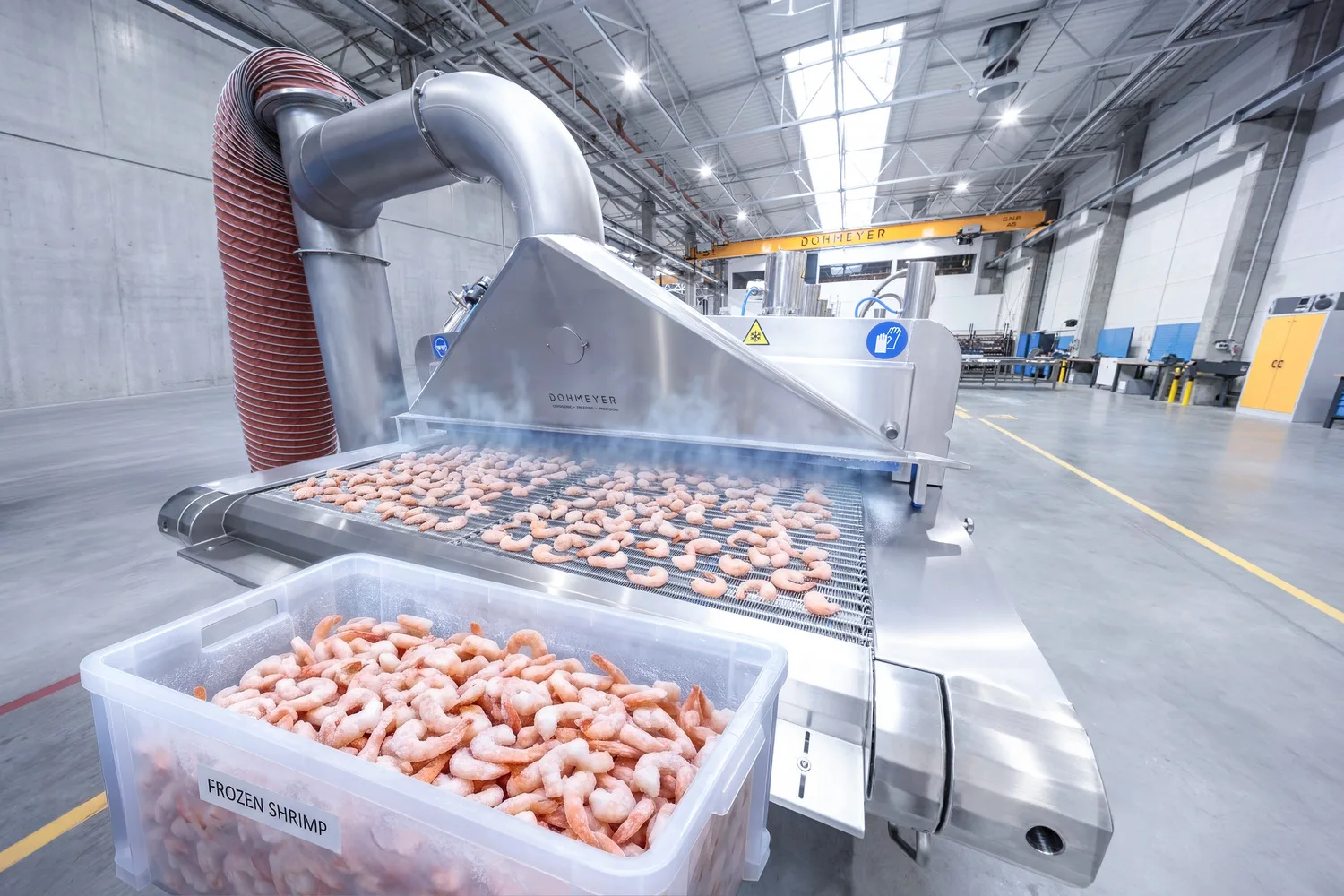
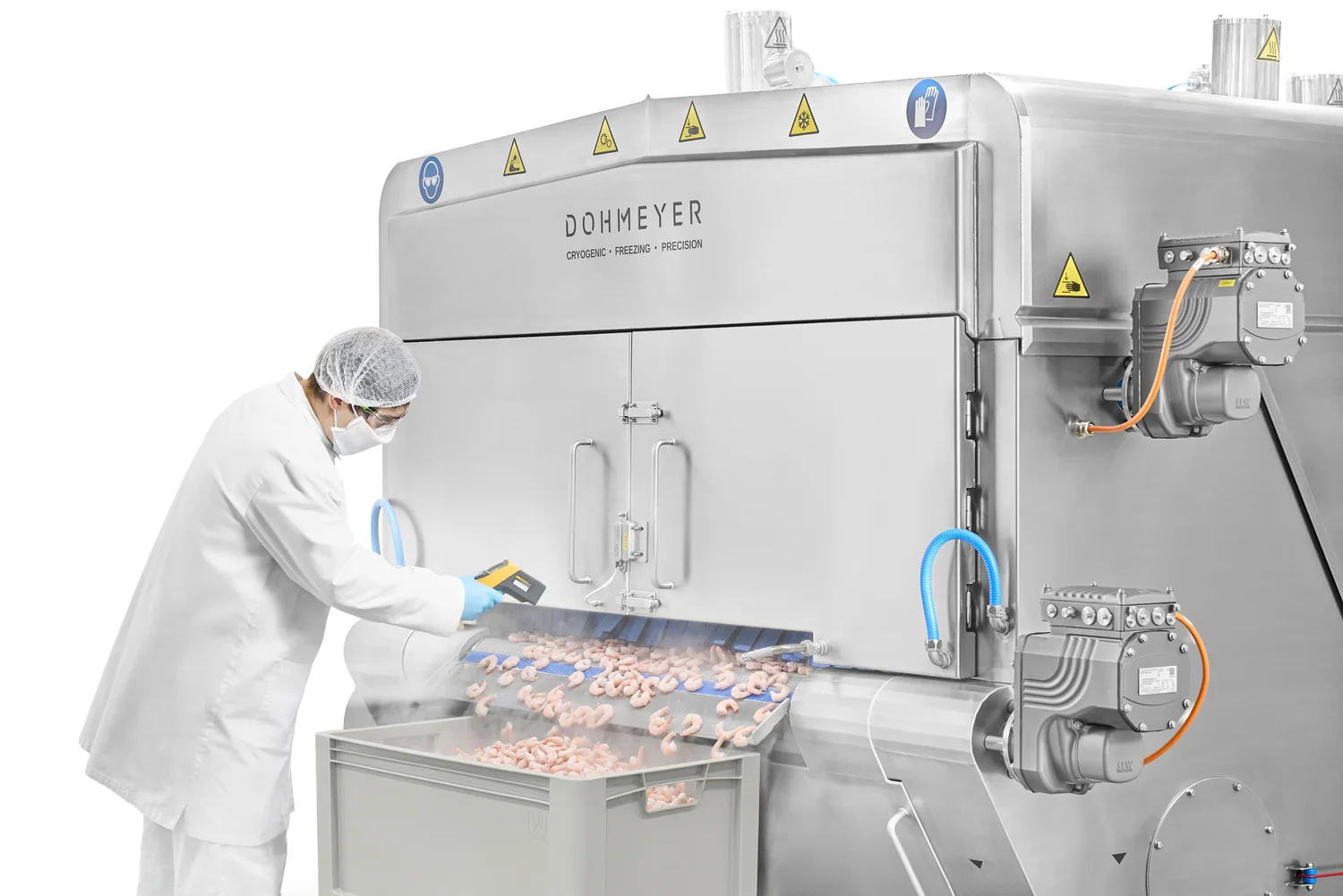
Achieving "Individual Quick Freezing" (IQF) for high-moisture seafood such as prawns, diced fish, and calamari is technically demanding due to the expansion of water during the phase change. And not only because of potential damage to cells.
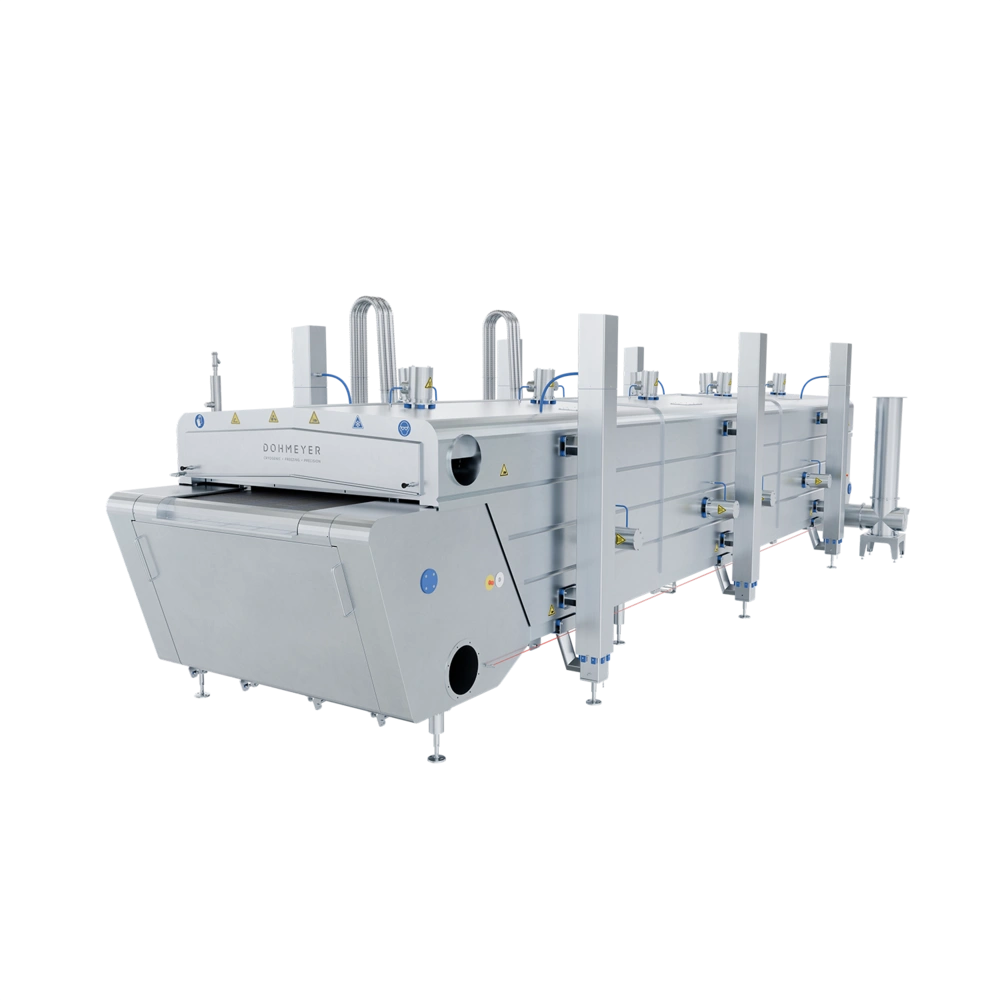
When water turns to ice, it expands by approximately 9%, which often causes separate pieces of seafood to touch and fuse into rock-solid clumps on a standard conveyor belt. Dohmeyer addresses this challenge through the Trideck Tunnel and Multibelt Freezer, which utilize vertically stacked conveyor belts to induce natural mechanical separation. As the seafood enters on the top belt, it undergoes an initial surface "crust freeze" that stabilizes its shape before it drops to the second belt.
This gentle fall naturally breaks any weak ice bonds already forming between the pieces. To further guarantee separation, the subsequent belts in the Trideck system may be set to run at different speeds, in order to better control the spread of product layer on the belt below. For example: speeding up the next level belt, to thin out the layer of product and expose more surface area to side-ventilation for maximum thermal exchange. This design allows a huge increase in capacity within the same physical space of a standard linear tunnel, making it an ideal solution for facilities with limited room for equipment.
IQF… but different
For particularly sticky or crumbly seafood products and mixes, the Cryo Roll and Cryo Tumbler offer a rotational alternative. These systems gently tumble the product within a rotating drum while liquid nitrogen is injected directly. Ensuring constant motion prevents clumping while maintaining a high temperature gradient for rapid solidification. Because these are sealed systems, they guarantee zero loss of fine particulates or sauces used for coating (cryo coating), which is critical for high-value products like surimi or seasoned seafood mixes.
These advanced IQF methods ensure that the final output is a free-flowing, individual product, which is the gold standard for consumer convenience and industrial packaging efficiency.
Fortifying the cold chain: the science of cryogenic ice glazing and shelf-life extension
Leveraging sub-cooling and the LIN Bath for increased product protection
Protecting seafood from the harmful effects of oxidation, freezer burn and dehydration during long-term logistics process, requires a robust physical barrier. Traditionally it was achieved through ice glazing, that is covering the product with a thin layer of ice.
Dohmeyer has optimized this process by utilizing cryogenic sub-cooling to enhance glaze adherence and uniformity. The process begins by sub-cooling the seafood surface to approximately –50°C using cryogenic gases – stored cold energy that creates strong thermal inertia. When this sub-cooled product is briefly dipped into a Dohmeyer LIN (Liquid Nitrogen) Bath or passed through a misting tunnel, a thin layer of water instantly undergoes a phase change, freezing tightly onto the product. This method can achieve a consistent ice pick-up of 10% to 15%, depending on the geometry of the seafood, such as the difference between smooth fillets and angular shellfish like shrimp.
The resulting glaze acts as a cushion during transport and a barrier against air contact, preventing the development of unpleasant flavors and surface discoloration caused by enzymatic browning. The Dohmeyer LIN Bath itself is engineered for high stability, featuring wave-free operation and precise nitrogen level monitoring to ensure that every batch receives an identical treatment. This precision is vital, as conventional freezing methods often result in uneven temperature distribution, leading to inconsistent glazing and potential quality gaps. Furthermore, the system includes an external container to extract all gaseous nitrogen, maintaining a safe environment for operators while ensuring rapid sanitation through its fully welded, open-structure stainless steel design.
By combining ultra-fast freezing with precise glazing, seafood producers can maintain premium quality over months of storage, meeting the rigorous standards of international export markets.
Bulk chilling evolution – eliminating inconsistency in large-scale seafood storage
Automated CO₂ snow delivery and rotating funnel technology for uniform thermal exchange
For large-scale seafood processors, maintaining a bacteriostatic environment during bulk storage and transport is as critical as the final freezing stage. The Dohmeyer Combo Chiller replaces manual dry ice application with a fully automated CO₂ snow process. A unique feature of this system is its proprietary rotating product funnel, designed to eliminate the "mountain effect" often seen in standard industry bins. While traditional systems allow seafood to pile up in the center, leaving the core warm while the edges over-freeze, the Dohmeyer funnel ensures a perfectly even, circular distribution of product into the bin.
This uniform layering allows four high-capacity Snowhorns to deliver a rapid thermal exchange across every surface of the batch. Beyond mere cooling, the expansion of liquid CO₂ into snow creates anoxygen-free, bacteriostatic atmosphere within the closed storage container, which halts microbial activity and significantly prolongs the shelf life of raw proteins.
The entire process is managed via a sophisticated PLC and HMI system, allowing operators to select from pre-programmed recipes that adjust the chilling cycle, based on product weight and type. This automation eliminates human error and minimizes cryogen waste, providing a repeatable and standardized foundation for high-speed production lines. From a sanitary perspective, the Combo Chiller meets the most rigorous global food safety standards while occupying significantly less floor space than mechanical chilling alternatives.
The economics of ROI and hygienic design in seafood freezing
Maximizing production and minimizing OPEX through Clean-by-Design engineering
Investing in Dohmeyer cryogenic equipment is not just a matter of “cryogenic fad” or a simple wanting for a quicker freezing. It is almost always a strategic and economic decision based on rapid Return on Investment (ROI) and operational efficiency.
One of the most compelling advantages of cryogenic tunnels and freezing spirals is their compact footprint. They typically occupy approx. 25% of the floor space required by their mechanical freezing counterparts for the same expected efficiency. In a modern processing plant where floor space is an important factor of any planning, this allows manufacturers to increase production capacity without costly facility expansions.
Furthermore, Dohmeyer's "clean-by-design" philosophy addresses the hidden costs of maintenance and downtime. Traditional mechanical freezers often contain internal evaporators, complex ductworks, and gaskets that act as reservoirs for biofilm and bacterial colonization. Dohmeyer cryogenic systems eliminate these problems by using top-lifting mechanisms or other means of full chamber access. Fully welded sloped surfaces for drainage, seals that do not require traditional gaskets – these features, paired with systems like integral automatic belt cleaning, significantly reduce the time, labor and aggressive detergents needed for daily sanitation.
While the operational cost (OPEX) involves the consumption of cryogenic gases, and it is always an important factor a food processor need to take in consideration, this is often offset by the drastic reduction in product yield loss – from 5% down to less than 1%. Add the avoidance of expensive defrosting cycles and you get Dohmeyer clients reporting a ROI within 6 to 12 months for standard units, with even complex systems like the Trideck achieving full ROI in under 4 years. All this while providing a decisive competitive advantage in the global seafood mdarket.